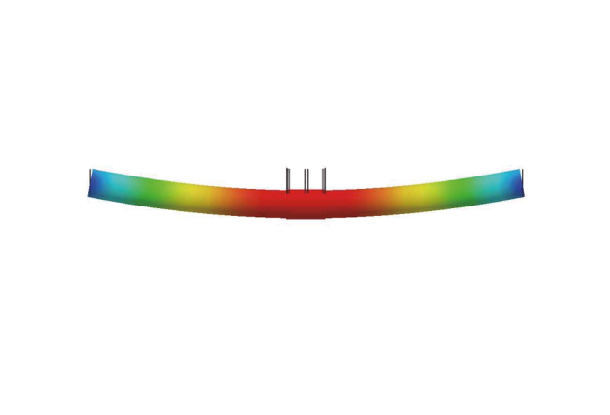
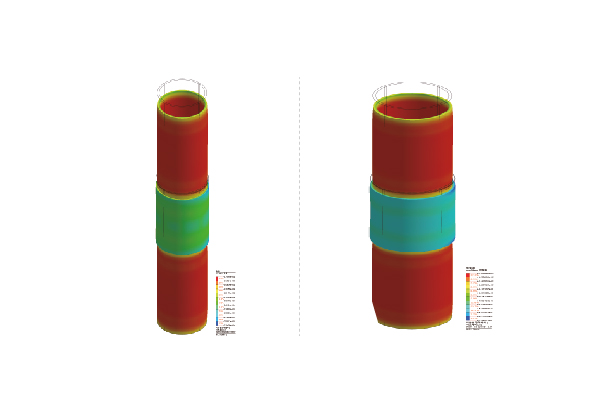
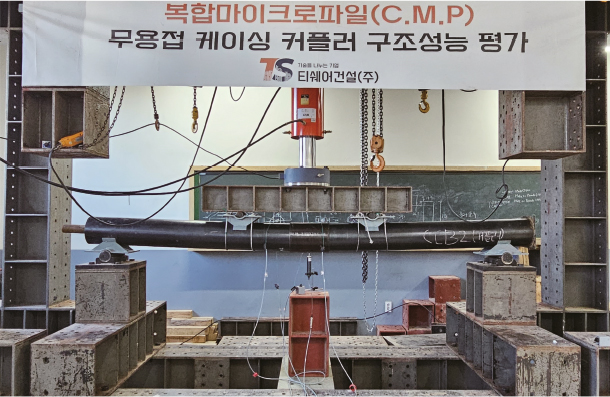
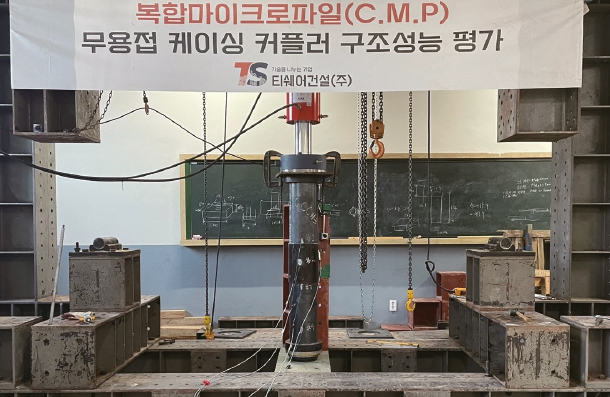
3D Structural Analysis
Flexural Tensile Strength Analysis
Compressive Strength Analysis
Flexural/Compressive Strength Evaluation
Flexural Tensile Strength Evaluation
Compressive Strength Evaluation
Performance Evaluation Results
Flexural Tensile Strength Evaluation: The moment strength of the specimen exceeds the design moment, demonstrating excellent flexural moment performance.
Compressive Strength Evaluation: The maximum axial compressive strength of the specimen is over 125% of the design compressive strength, showing superior compressive performance.
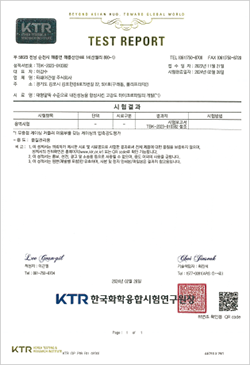
* TEST REPORT(Certificate of Test)) : TBK-2023-010382
Test Certification by Korea Testing & Research Institute (KTR)
Comparison of Methods
| Category |
Non-Welding Micropile |
Micropile |
Method
Photo |
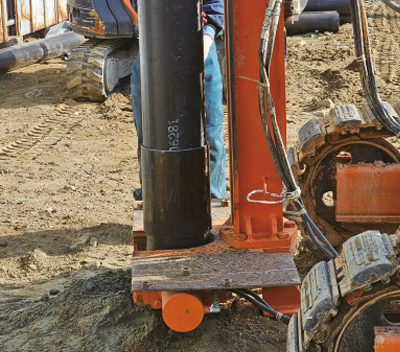 |
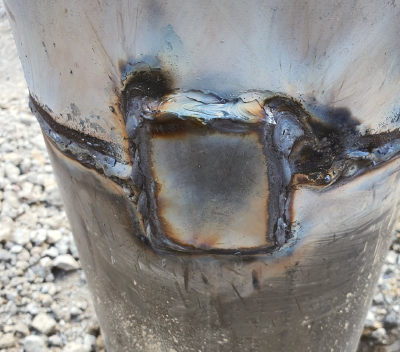 |
Connection
Method |
- 1) Insert the 1st casing into the ground.
- 2) Position the Weldless Coupler and connect with the 1st casing.
- 3) Connect and insert the 2nd casing.
|
- 1) Insert the 1st casing into the ground.
- 2) Position the 2nd casing on top of the 1st.
- 3) Install spark barriers and deploy fire watches.
- 4) Weld the 1st and 2nd casings.
- 5) Insert the 2nd casing.
|
Connection
Time |
|
|
| Pros & Cons |
- 1) Proprietary method executed by the patent holder.
- 2) Prevents damage to casing connections via weld-free technology.
- 3) Improved pile verticality.
- 4) Zero risk of fire or explosion.
- 5) Shortens construction period.
- 6) Eco-friendly method reducing carbon and hazardous emissions (ESG-aligned).
|
- 1) General method accessible to any contractor.
- 2) Casing impact may damage welded parts.
- 3) High risk of fire and explosion.
- 4) Excessive safety costs for fire prevention.
- 5) Additional fire safety steps prolong the construction period.
|
Application
Sectors |
- 1) Sites with high fire/explosion risks.
- 2) Projects with urgent schedules.
- 3) Sites with boulder layers (potential welding damage).
- 4) Semiconductor factories, chemical/oil plants.
|
Non-Welding Micropile
| Connection Method |
- 1) Insert the 1st casing into the ground.
- 2) Position the Weldless Coupler and connect with the 1st casing.
- 3) Connect and insert the 2nd casing.
|
| Connection Time |
|
| Pros & Cons |
- 1) Proprietary method executed by the patent holder.
- 2) Prevents damage to casing connections via weld-free technology.
- 3) Improved pile verticality.
- 4) Zero risk of fire or explosion.
- 5) Shortens construction period.
- 6) Eco-friendly method reducing carbon and hazardous emissions (ESG-aligned).
|
| Application Sectors |
- 1) Sites with high fire/explosion risks.
- 2) Projects with urgent schedules.
- 3) Sites with boulder layers (potential welding damage).
- 4) Semiconductor factories, chemical/oil plants.
|
Micropile
| Connection Method |
- 1) Insert the 1st casing into the ground.
- 2) Position the 2nd casing on top of the 1st.
- 3) Install spark barriers and deploy fire watches.
- 4) Weld the 1st and 2nd casings.
- 5) Insert the 2nd casing.
|
| Connection Time |
|
| Pros & Cons |
- 1) General method accessible to any contractor.
- 2) Casing impact may damage welded parts.
- 3) High risk of fire and explosion.
- 4) Excessive safety costs for fire prevention.
- 5) Additional fire safety steps prolong the construction period.
|
| Application Sectors |
- 1) Sites with high fire/explosion risks.
- 2) Projects with urgent schedules.
- 3) Sites with boulder layers (potential welding damage).
- 4) Semiconductor factories, chemical/oil plants.
|
Performance Evaluation Results
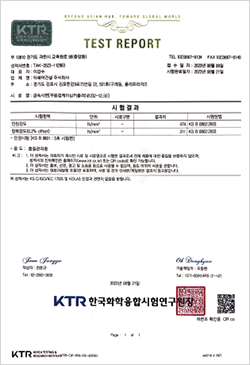
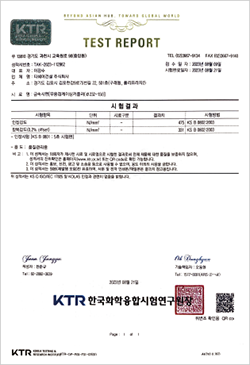
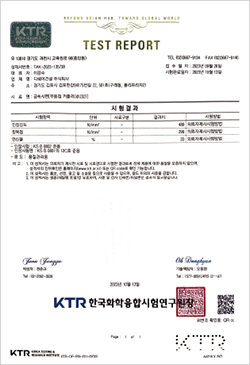
The yield strength of the weldless coupler material is equal to or higher than that of the steel pipe, ensuring sufficient safety.
* TEST REPORT(Certificate of Test)) : TAK-2023-112962
* TEST REPORT(Certificate of Test)) : TAK-2023-112963
* TEST REPORT(Certificate of Test)) : TAK-2023-135738
Test Certification by Korea Testing & Research Institute (KTR)